
Where Natural History Becomes Art
By Murphy Kalil
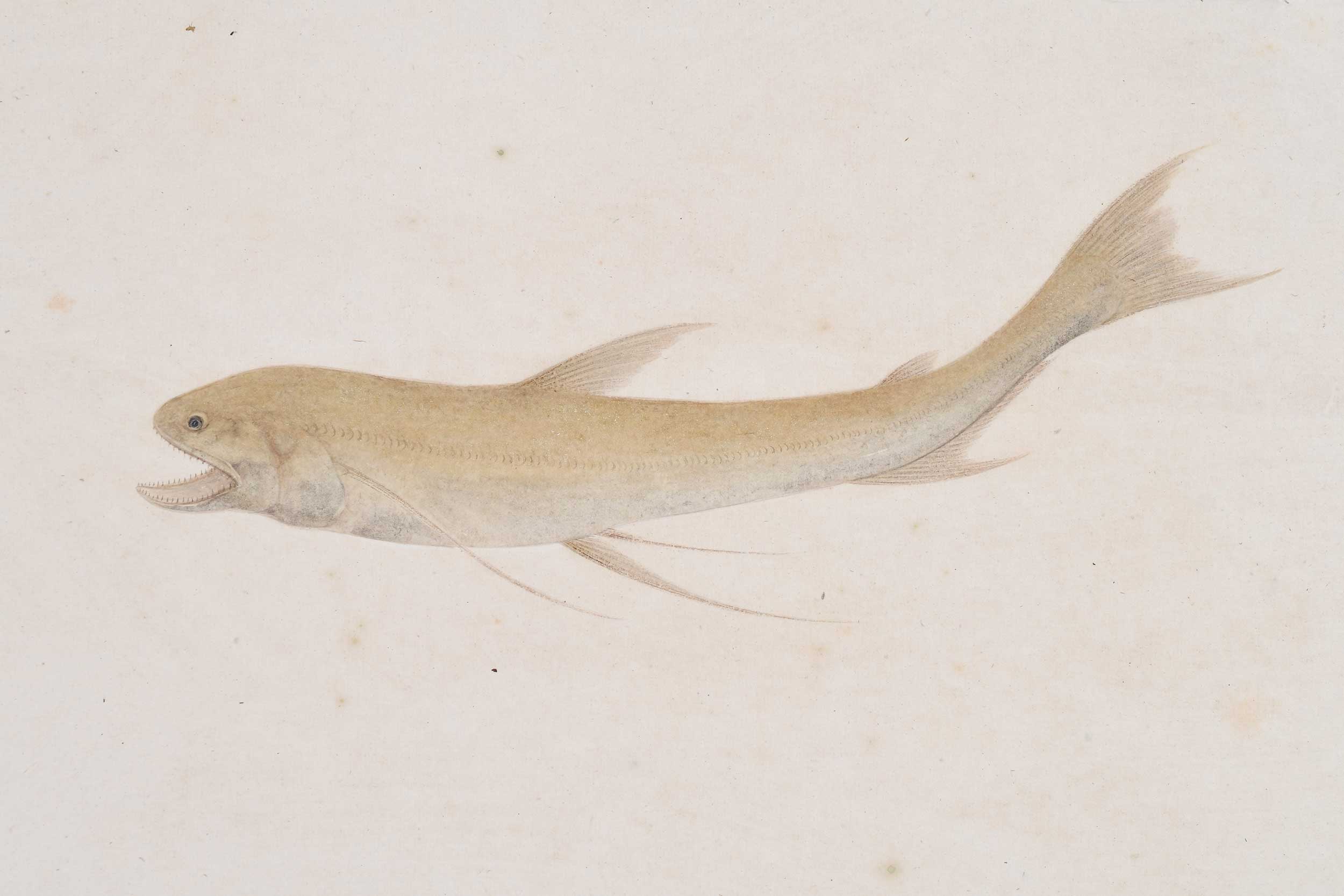
Lot 1058
Lizardfish Attributed to Kawahara Keiga or Workshop
Brunk Auctions is pleased to offer in our November 12 British & Continental auction seven exemplary watercolor works attributed to Keiga Kawahara or his workshop in Nagasaki, each one depicting a beautifully-rendered fish native to Japan, a subject he was famous for. Pieces such as these are rare to come to market, and rarer still to be found in any great number.
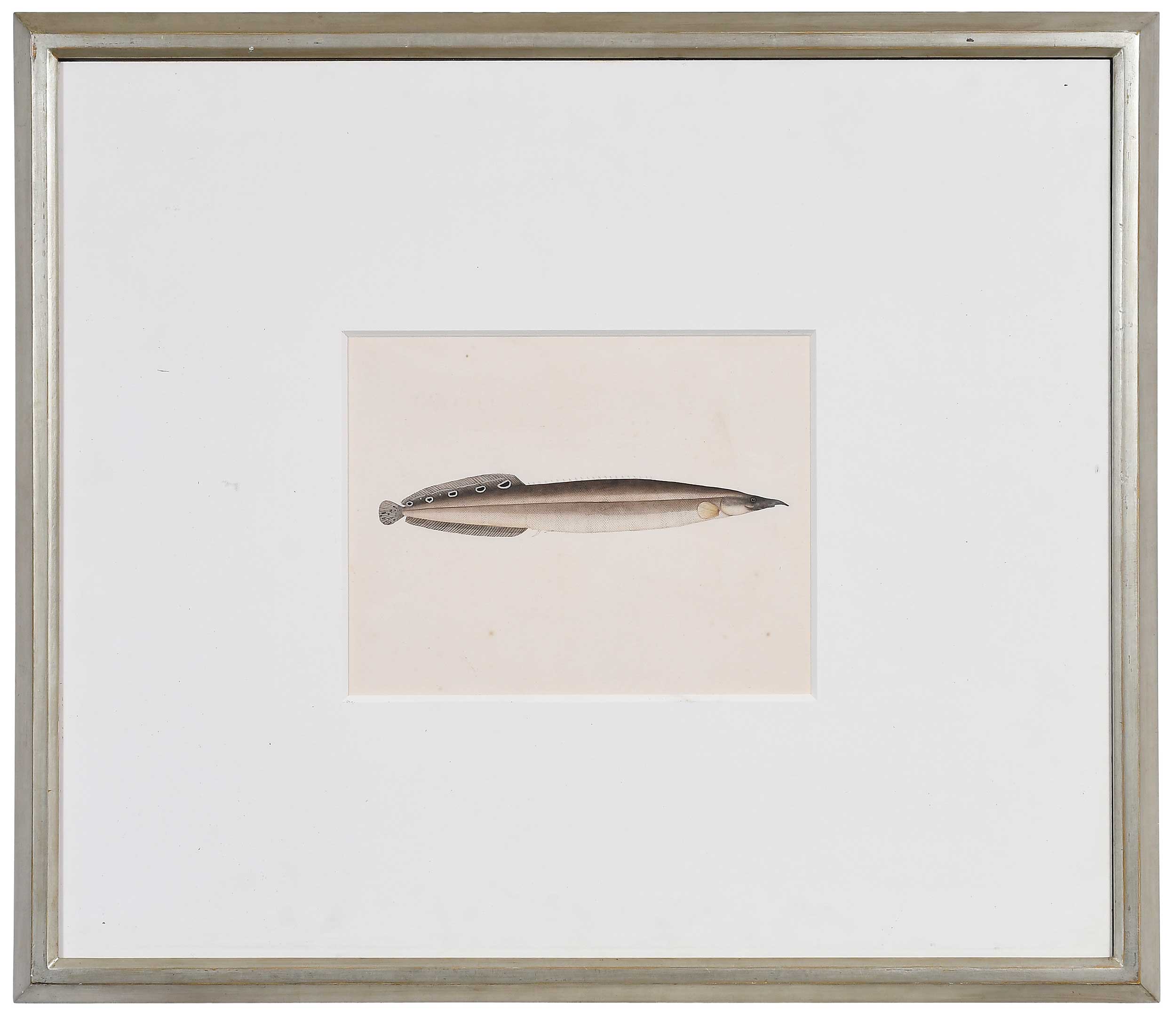
Lot 1052
Eel Attributed to Kawahara Keiga or Workshop
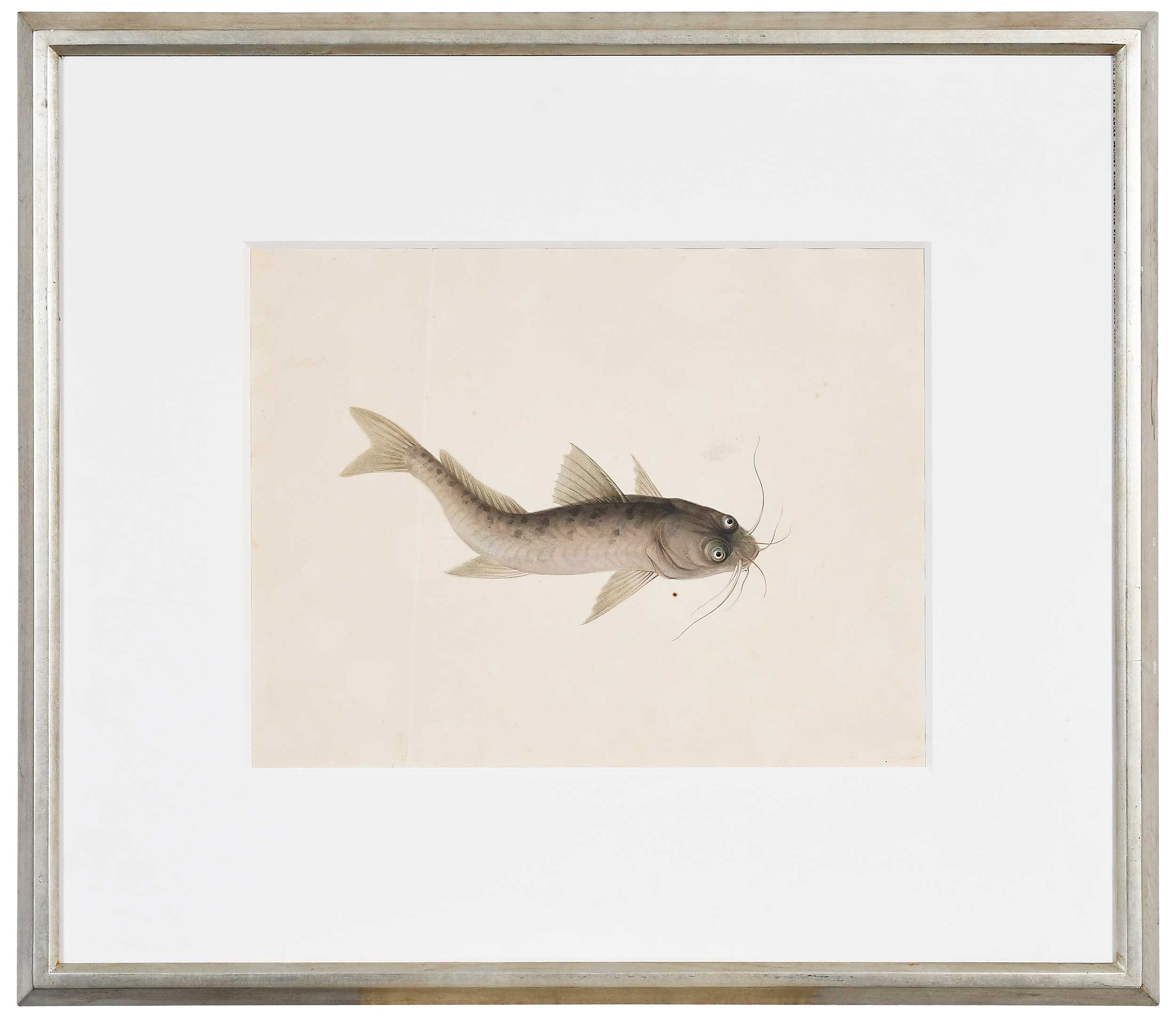
Lot 1053
Catfish Attributed to Kawahara Keiga or Workshop
Keiga Kawahara studied under famed Nagasaki painter Ishizaki Yushi. From 1811 to 1842, with special governmental permission, he worked on Dejima at the request of the island’s directors, producing works depicting both life on the artificial island, but also throughout the rest of Japan, a country that was forbidden upon penalty of death for any European to see personally.
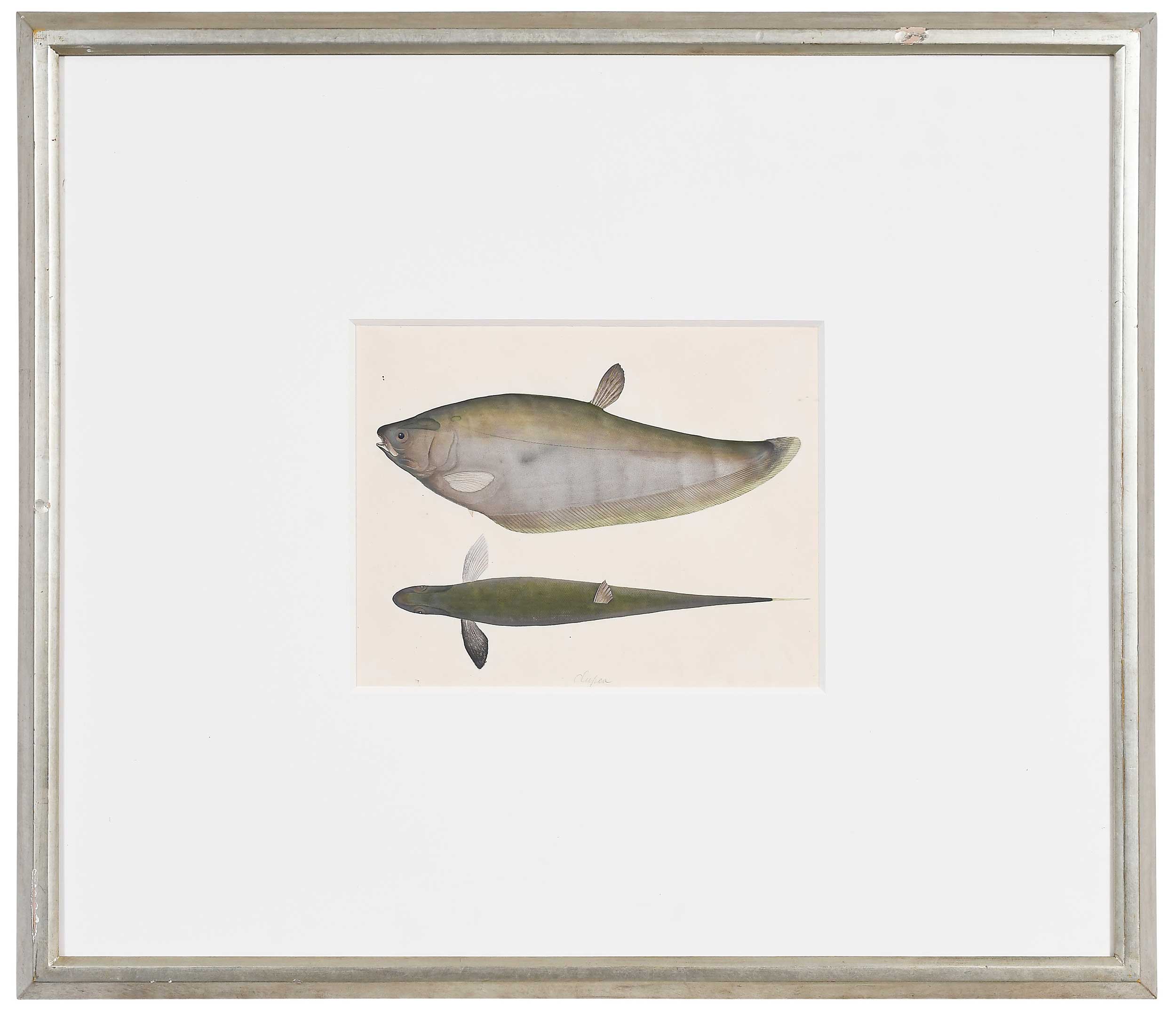
Lot 1054
Knifefish Attributed to Kawahara Keiga or Workshop
Kawahara worked in close proximity to the Dutch traders, painting works largely on the commission of the Dutch Government, which were to be shipped back to the Netherlands. Common subjects included plants, birds, reptiles, marine life, social scenes, landscapes, and portraits. At the behest of trading post director Johan Willem de Stürler and botanist-physician Philipp Franz von Siebold, the 1820s saw Kawahara turn his focus to depicting Japan’s native flora and fauna, producing some of the first images of Japan’s wildlife to reach the Western world. In 1825, Dejima saw the arrival of Carl Hubert de Villeneuve, a Dutch artist who taught Kawahara fundamental Western painting techniques. Kawahara incorporated these methods into traditional Japanese painting, which informed his personal style for the rest of his life, and his studies of Japan’s native plants and animals were instrumental for the work of– and publications made by– European biologists Coenraad Jacob Temminck, Hermann Schlegel, and Heinrich Bürger.
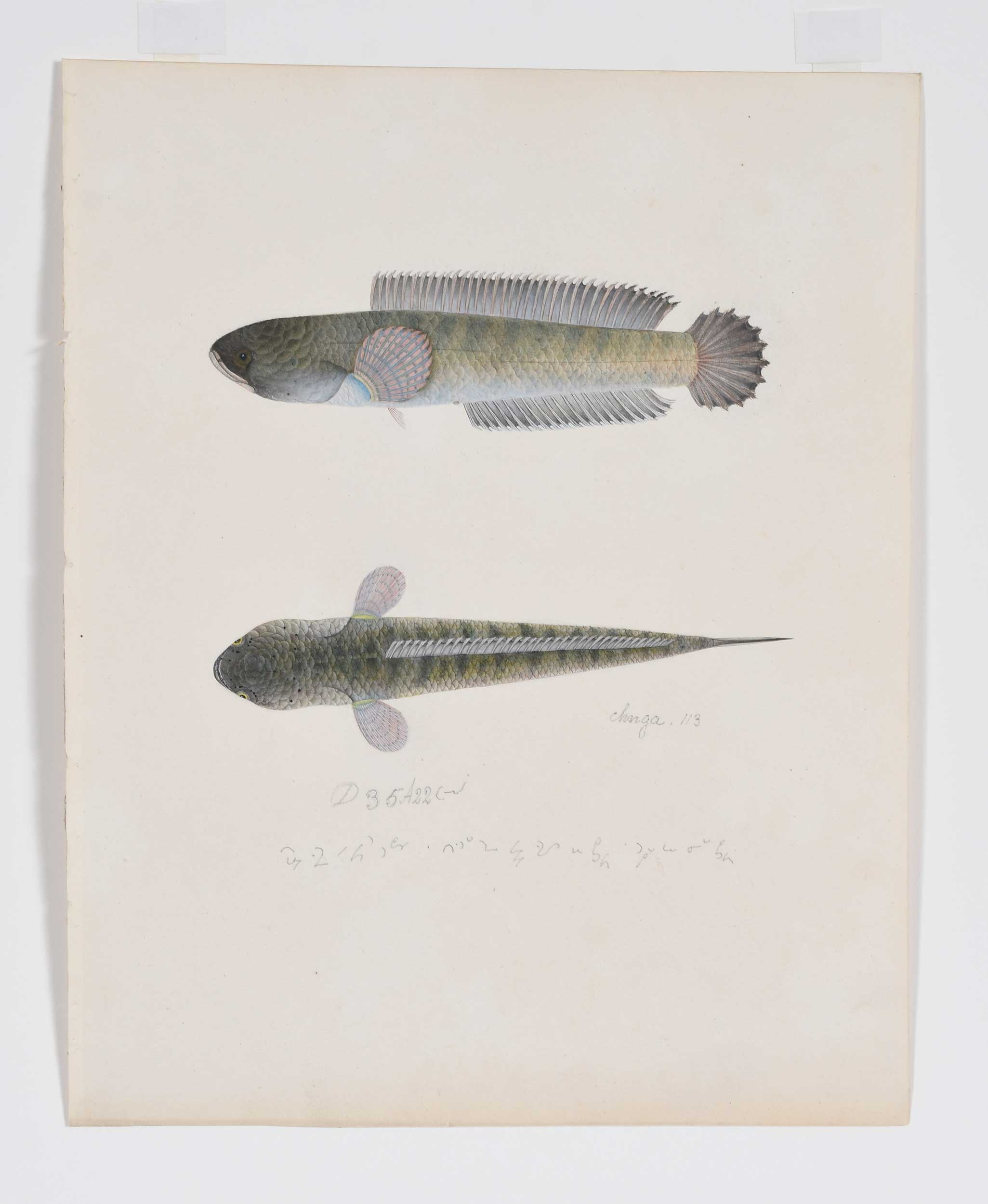
Lot 1056
Dwarf Snakehead Attributed to Kawahara Keiga or Workshop
In the early 17th century, Edo-period Japan became a fortress. Under the rule of the Tokugawa Shogunate, the Sakoku policy, a doctrine of strict isolationism, was enacted. Under this policy, foreign relations and trade were heavily restricted, with the only official European presence in the country being confined to a Dutch trading post on the man-made island of Dejima in Nagasaki. Japan’s foreign trade within Asia was restricted to China and Korea. This Dutch-only exclusionary trade policy was the result of the Shimabara Rebellion, an uprising of Japanese Catholic converts suspected to have benefited from the aid of Portuguese missionaries, which was put down by the Shogunate with the aid of the Dutch merchants. It was this aid that saw the Dutch become the only Western nation permitted to trade with Japan, which gave rise to the phenomenon of rangaku, or “Dutch learning,” which in turn saw the fruits of the Scientific Revolution in Europe disseminate into the country, though they still were confined to Dejima.
This limitation also brought the Dutch and Japanese into contact with one another in spheres beyond the mercantile. With accommodations for only around 20 Dutchmen at any given time, there was still a comparatively large Japanese presence on Dejima, mostly in administrative and security roles but also present as landlords, caterers, interpreters, and, in at least one case Today, when Japan’s presence on the world stage has shifted beyond all reckoning from their historical isolationism, the significance of Kawahara’s work and his unique position on the threshold between his once-insular island nation and the outside world is not to be overlooked. There was a time at which the only way zoologists and botanists in the Western World could ever hope to witness Japan’s unique flora and fauna was through his work, or reproductions thereof.
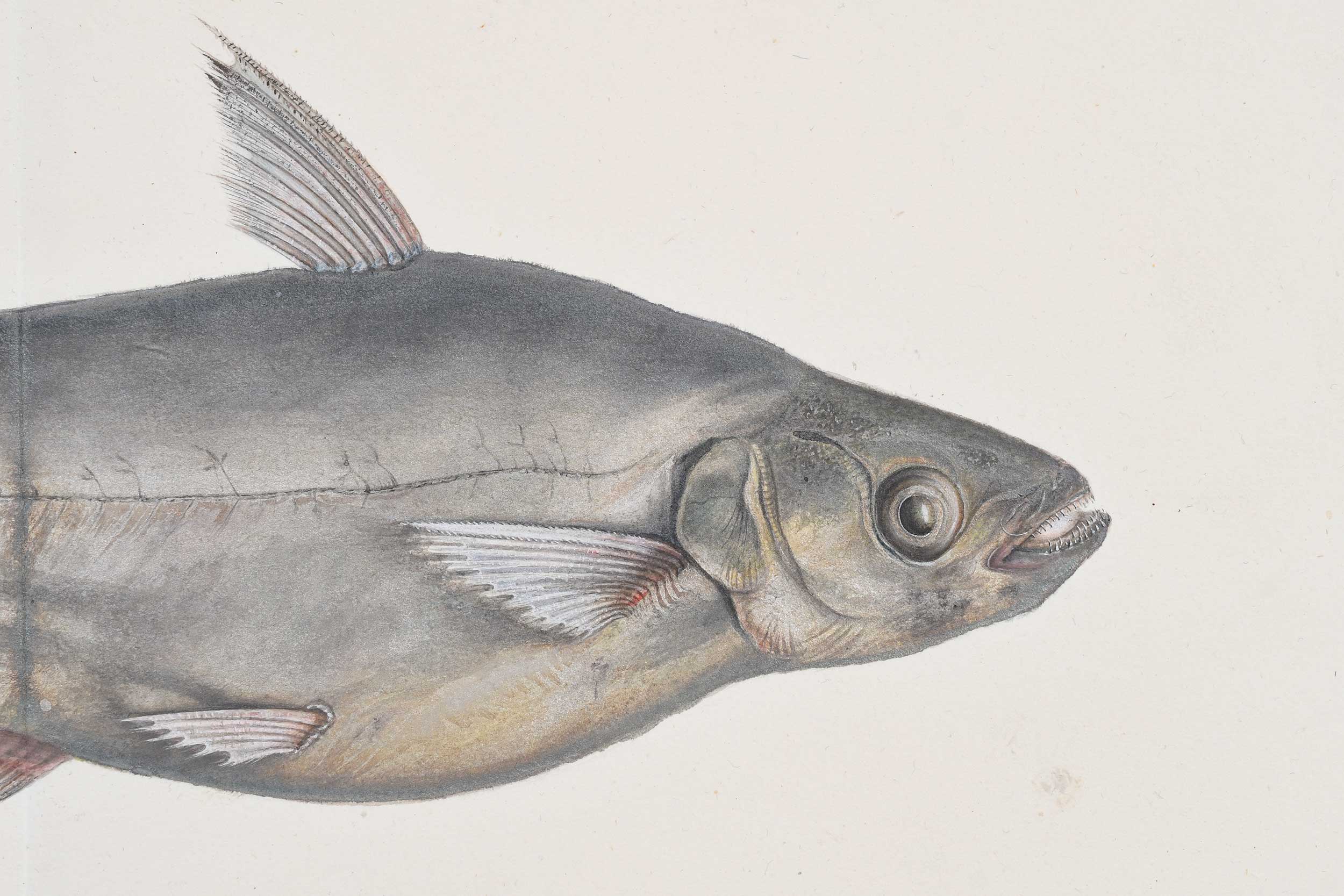
Lot 1055
Sheatfish Attributed to Kawahara Keiga or Workshop
Kawahara’s depictions of native Japanese eel, catfish, knifefish, sheatfish, dwarf snakehead fish and lizard fish are seven exemplary watercolor works in our British & Continental auction, taking place November 12, 2026.